
Monocouche Render vs Silicone Render: UK Guide (2026)
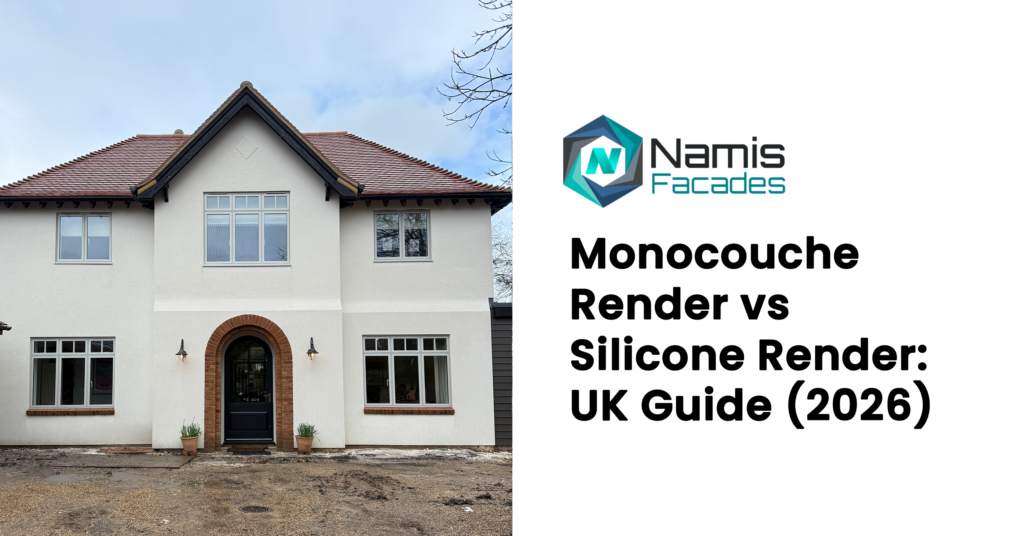
If you are planning to re-render your property or are in the final design phases of a new-build residence, one of the most common questions you will come across on UK building forums is:
“Monocouche render vs silicone render: which is better?”
The honest answer is that both systems have their designated strengths. The perfect choice depends entirely on your project budget, the current structural condition of your walls, your lifestyle expectations, and the visual aesthetics you want to achieve.
Having specified and installed both of these advanced systems on hundreds of residential extensions, modern retrofits, and high-rise commercial properties across the country, our team at Namis Facades has seen where each material thrives—and where making the wrong choice can lead to structural damp issues or costly early repairs.
In this comprehensive, unbiased guide, we compare monocouche render vs silicone render based on real, on-site installation experience rather than manufactured sales claims.
Quick Answer: Which Render System is Actually Better?
If a homeowner asked us to recommend exactly one system without knowing any other details about their property, our specialists at Namis Facades would generally suggest silicone render.
Why? Because premium silicone thin-coat systems offer:
- Superior elasticity (reducing the risk of hairline structural cracks)
- Lower long-term maintenance cycles (requiring fewer washes over time)
- Excellent algae resistance (essential for damp, shaded UK elevations)
- Superb water repellency while remaining naturally breathable
However, that does not automatically make monocouche render the wrong choice. In many situations—especially where walls require thick leveling adjustment and budget is a major driving force—monocouche is actually the smarter, more cost-effective option. The best render system isn’t the most expensive one; it’s the one that is engineered for your property’s substrate blockwork.
Speak with our Specialists
Unsure which render fits your specific house structure? Contact Namis Facades today on our official platform https://namis.co.uk/ to schedule an on-site evaluation. Our expert surveyors will analyze your brick condition and map out a custom, no-obligation rendering layout for free.
What Is Monocouche Render?
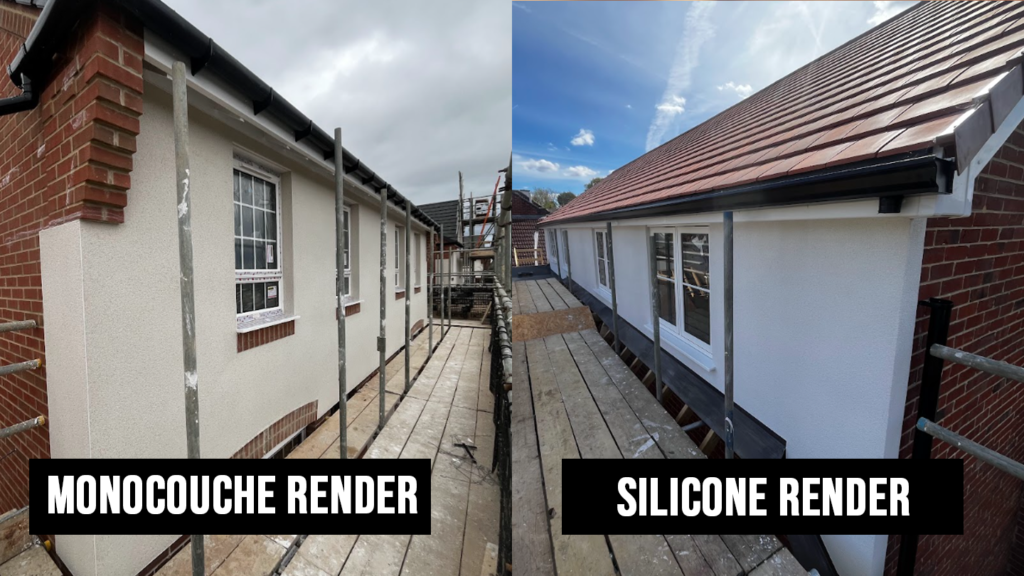
Derived from the French translation for “one single coat”, monocouche render is a high-performance, cement-based product blended with hydrated lime, sand pigments, and custom acrylic polymers. Applied directly onto suitable brickwork or aerated masonry blocks, it is known for its heavy compound thickness (generally 15mm – 18mm) and is typically hand-scraped to leave a premium flat-suede texture resembling natural lime blocks.
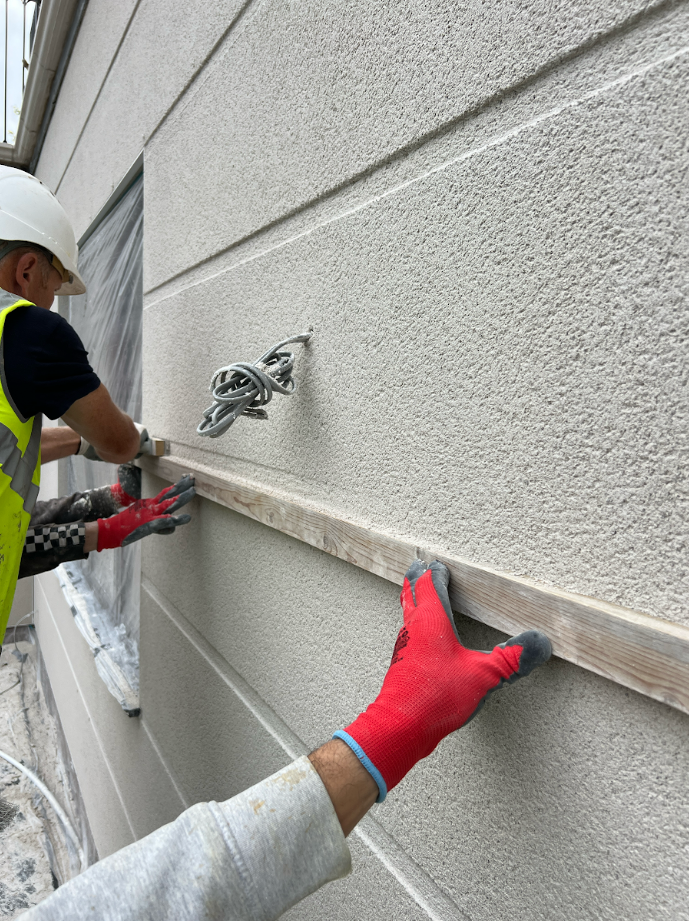
Crucial Attributes of Monocouche:
- Through-Coloured: The pigment runs entirely through the plaster. This means no future repainting is required, and minor surface scratches remain virtually invisible.
- Efficient Direct Bond: It is applied directly onto masonry in a unified dual-pass, skipping the lengthy multi-layered coat delay of old-fashioned sand and cement.
- Cost-Effective: It holds a lower initial material cost compared to silicone thin-coats.
What Is Silicone Render?
Silicone render is a highly specialized thin-coat synthetic system (averaging just 1.5mm – 3mm in thickness). Unlike cementitious renders, it utilizes silicone resins emulsified in flexible acrylic blends.
Rather than sticking directly to raw brick, silicone render is applied over a reinforced structural basecoat. The installer embeds a high-tensile fiberglass mesh within an adhesive backing coat, applies a dedicated primer, and finishes it with the self-cleaning silicone topcoat.
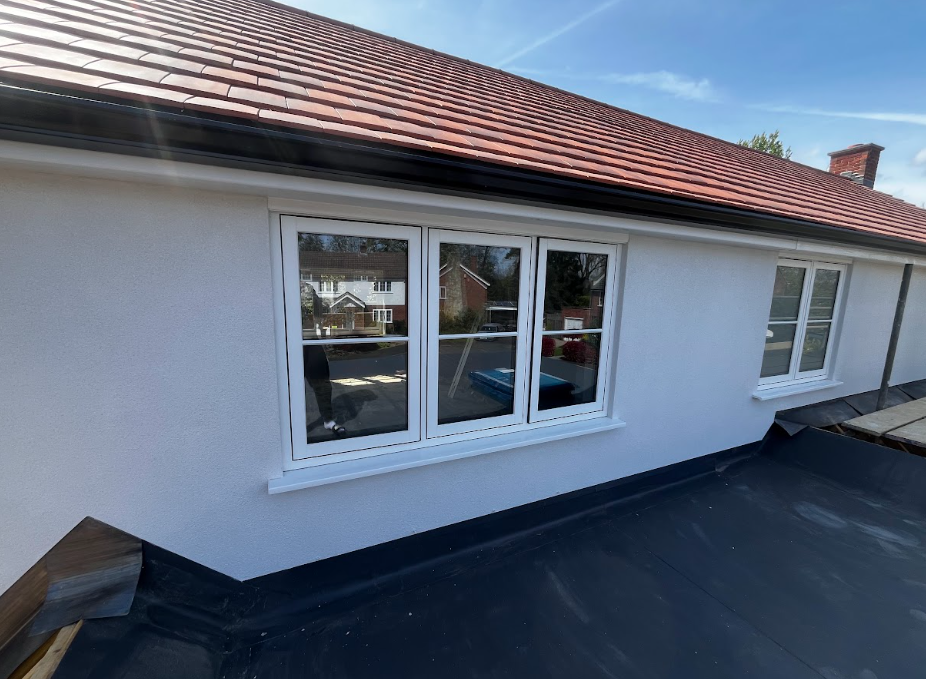
Crucial Attributes of Silicone:
- Exceptional Flex: Highly elastic, meaning it naturally stretches and moves with your home’s minor settlement cracks without tearing.
- Breathable Water Barrier: Wards off horizontal rain droplets while allowing interior moisture condensation to dissipate.
- Extended Durability: Commonly preserves its pristine colors for 25 to 35+ years.
Comparison Table: How They Perform Side-by-Side
Performance Metrics / Features | Monocouche Render (Scraped Finish) | Silicone Thin-Coat Render System |
Primary Base Materials | Cement, hydrated lime, quartz sands | Synthetic silicone resins, acrylic blends |
Material Thickness | Thick-coat (approx. 15mm – 18mm) | Thin-coat (approx. 1.5mm – 3.0mm) |
Substrate Crack Resistance | Moderate (prone to hairline micro-cracks) | Exceptional (fibreglass mesh reinforced) |
Is Silicone Render Breathable? | Yes, highly breathable structure | Exceptional (behaves like Gore-Tex) |
Algae Growth Resistance | Moderate (rougher pores trap humidity) | Outstanding (self-cleaning water-beading) |
Estimated UK Installation Cost | £40 – £55 per m² of wall area | £55 – £75 per m² of wall area |
Service Lifespan | 15 – 25 Years | 25 – 35+ Years |
EWI Compatibility | Limited compatibility | Perfect for External Wall Insulation |
Monocouche Rendering Pros and Cons
When finalizing your decision, evaluating the technical tradeoffs is vital to protect your home’s thermal wrap.
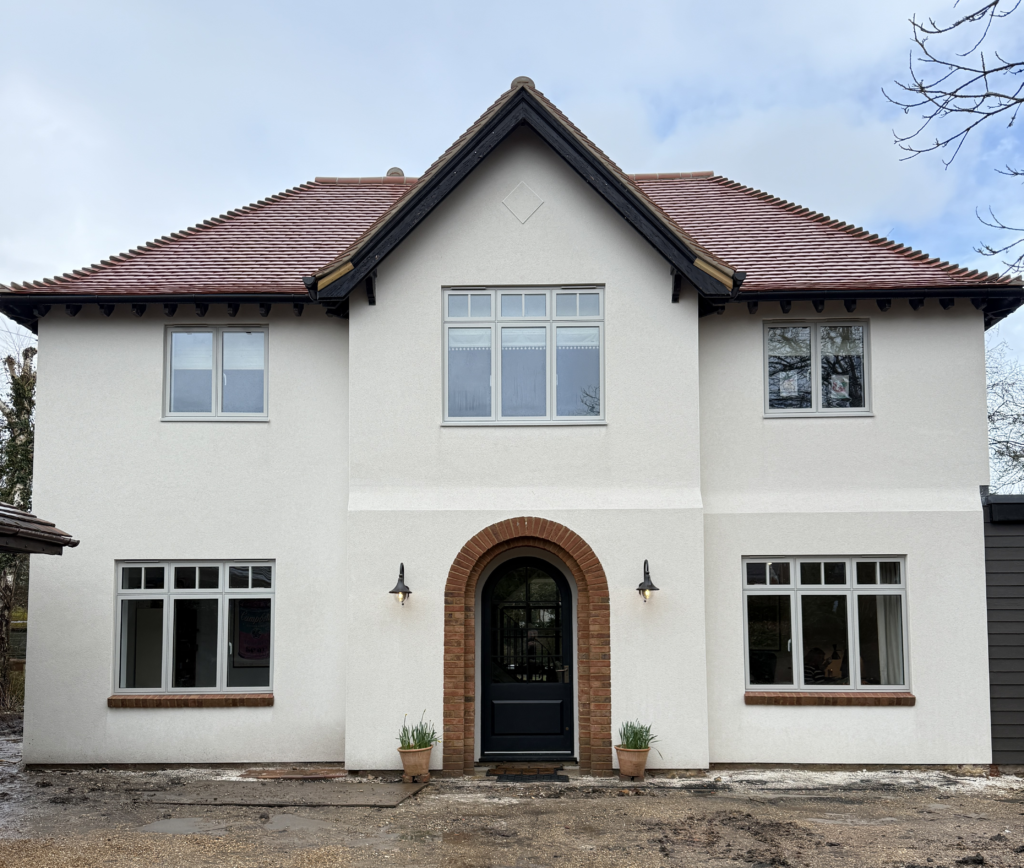
The Advantages of Monocouche Render
- Lower Upfront Cost: Usually reduces initial material and labor costs, saving thousands on large detached houses compared to silicone.
- Direct Substrate Leveling: Its thicker structure easily fills deviations, deep mortar joints, and minor dents in old un-even brickwork.
- Excellent Fire-Smoke Rating: Being primarily a mineral cement plaster, it possesses inherent Class A1 non-combustible ratings.
The Disadvantages of Monocouche Render
- Vulnerability to Organic Growth: Its open sand texture collects airborne dust and rainwater, meaning north-facing walls in shaded or damp UK environments can develop green algae within 3 to 5 years.
- Lower Structural Flex: Lacks synthetic elastic binders. If your home’s foundation experiences seasonal shifts, monocouche is far more prone to developing hairline cracks.
Calculate Your Custom Rendering Cost
Plaster selection shouldn’t be guesswork. Want a transparent breakdown of the house rendering cost UK for your property size? Visit Namis Facades at https://namis.co.uk/ and try our live residential cost estimator, or submit your dimensions to receive a bespoke, itemized estimate.
Silicone Render Pros and Cons
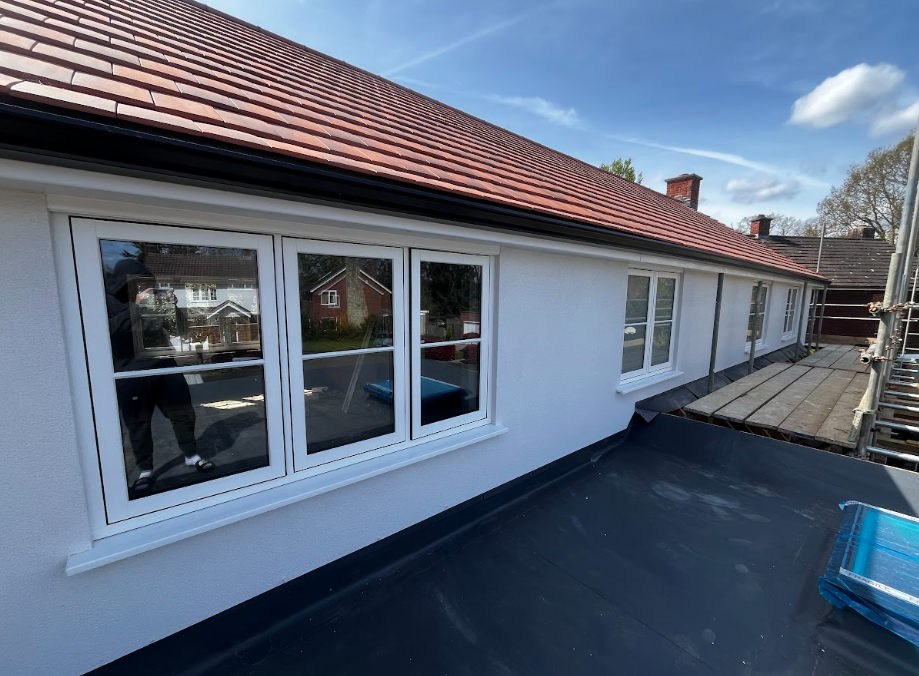
The Advantages of Silicone Render
- Virtual Crack Exclusion: The heavy fiberglass grid embedded in the basecoat absorbs structural shifts, keeping the exterior cladding completely free of fractures.
- Exceptional Self-Cleaning Actions: Because the silicone surface is hydrophobic, rain droplets run off in beads, picking up superficial environmental dirt and pollen along the way.
- Greatly Retains Property Value: Keeps your kerb-appeal fresh for decades, eliminating the cycle of frequent chemical pressure washes.
The Disadvantages of Silicone Render
- Higher Initial Cost: The multi-stage application (basecoat, mesh embedment, primer, top-coat) requires more days on the scaffolding, increasing initial labor costs.
- Heavy Reliance on Dry Weather: Synthetic silicone is highly sensitive to damp weather during application. If it rains mid-installation, it can ruin the finish, requiring a experienced specialist to apply.
Real Site Examples: When to Choose Which?
To illustrate how these properties translate to real projects, here is how the design team at Namis Facades advises clients:
Case Study: Re-Rendering an Older 1930s Semi-Detached UK Home
- Property Condition: Solid brickwork walls with uneven block leveling and existing internal damp tendencies.
- System Recommended: Silicone Thin-Coat Render System.
- Why? Since older properties are highly susceptible to masonry movement and thermal cold-bridging, the breathable, elastic behavior of silicone keeps the walls healthy and prevents damp retention.
Case Study: Brand-New Level Blocks Extension
- Property Condition: Modern, flat, newly laid lightweight blocks.
- System Recommended: Monocouche Through-Coloured Render.
- Why? Because the masonry substrate is perfectly flat, level, and structurally stabilized, we can apply through-coloured monocouche directly and safely. This saves the client significant upfront capital while providing a classic, premium look.
❓ Frequently Asked Questions (FAQ)
1. Can I apply silicone render over old monocouche render directly?
No. Applying a thin-coat silicone layer directly over aging monocouche is not recommended. To prevent peeling, bubbling, and catastrophic bond failures, our team at Namis Facades first treats the wall with biocide washes, carries out necessary patch repairs, applies a high-adhesion basecoat with embedded fiberglass mesh reinforcing, and then paints the specialized silicone primer before troweling on the silicone topcoat.
2. Is silicone render breathable and why does it prevent damp?
Yes, high-quality silicone render is exceptionally breathable. It acts exactly like high-tech athletic outdoor apparel—its microscopic structure is open enough to allow internal water vapor molecules (from cooking, showering, heating) to pass out of your walls, but tight enough to block dense external rain droplets from entering. This breathability keeps the building envelope dry and prevents internal black mold.
3. How does K Rend vs silicone render compare?
It is a common mistake to compare these directly. “K Rend” is actually a premium manufacturer brand name rather than a specific rendering material. K Rend produces both silicone-enhanced monocouche renders (applied thick, like K Rend Silicone FT) and thin-coat organic silicone systems (like K Rend Silicone TC). At Namis Facades, we source the ideal material from leading manufacturers (K Rend, PRB, or Fassa Bortolo) depending on your home’s substrate structure.
Secure Your Free Site Survey Today
Ready to upgrade your home’s weather defense and elevate its street-side value? Don’t leave your property’s exterior to general builders. Visit our official website https://namis.co.uk/ to schedule a Free External Site Survey with Namis Facades. You can also reach our engineering support team directly to discuss your options. Let’s build something beautiful together!